
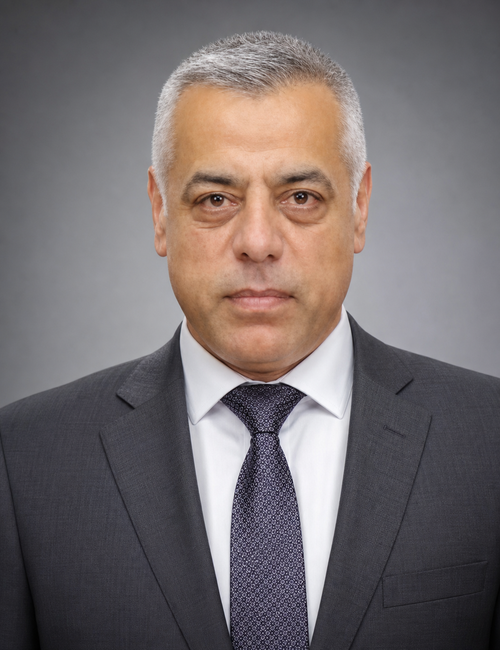
Academic Staff

May 10, 2026, 2:31 a.m.
Mizgeen Mohammed Hasan (PhD) Head of Geography Department
None
Professor in Urban Geography

Geography
College of Basic Education
University of Duhok

  • PhD in Urban Geography, Lebanese University, Beirut, 2015.
  • MA in Maps and GIS, University of Mosul, 2005.
  • BA Geography, University of Mosul, 1993.

University-level teaching in geography is a rich experience that combines theoretical knowledge with practical application. This experience began in 2005 at the University of Duhok, within the College of Arts – Department of Geography, where diverse courses were taught, including map principles, geographical texts in English, thematic maps, geostatistics, human development, urban geography, and political geography.

This phase focused on building students' knowledge base by developing their map-reading skills, analyzing scientific texts, and using quantitative methods. Teaching texts in English also contributed to broadening students' exposure to international literature, while courses like human development and urban geography connected geographical knowledge to contemporary issues.

At the end of 2023, I moved to the College of Education – Department of Geography at the University of Duhok, assuming the position of Head of Department and continuing to teach geostatistics and scientific research methodology. This role allowed me to combine academic leadership with teaching and contribute to curriculum development.

The importance of research methodology in preparing students scientifically was highlighted, alongside the role of geostatistics in analyzing spatial phenomena. This experience reflects an integrated approach that combines knowledge transfer, research skills development, and contributing to the development of the educational process in a way that serves the community.

Research

Research in this field focuses on employing modern technologies to address development and urban issues. The use of Geographic Information Systems (GIS) and Remote Sensing (RS) is highlighted as essential tools for analyzing spatial patterns, monitoring changes, and supporting decision-making.

Human development issues also receive particular attention within the frameworks adopted by the United Nations Development Programme (UNDP), aiming to analyze well-being levels and measure spatial development disparities.

Urban and urban planning problems are a key focus, through the study of urban sprawl and pressure on services, and research into sustainable urban development strategies. These interests reflect an integration of technical analysis and applied vision to serve development goals.

Academic supervision is a cornerstone of higher education, playing a pivotal role in developing students' scientific research skills and fostering critical thinking. Since 2008, this experience has encompassed supervising numerous graduation research projects in the Faculties of Humanities and Education at the University of Duhok, within the field of human geography, including topics such as development, urbanization, population distribution, and spatial relationships.

This phase was characterized by a focus on guiding students toward selecting research topics relevant to the local context, training them in formulating scientific problems, and employing quantitative and qualitative methodologies in data analysis. Efforts were also made to develop their abilities in utilizing scientific sources and writing research papers according to established academic standards.

Since 2022, the supervision experience has expanded to include postgraduate students, through the supervision of several master's theses and doctoral dissertations in the field of geography. This role has required a deeper level of scientific guidance, encompassing the design of theoretical frameworks, the application of advanced research methodologies, and the discussion of findings in light of current literature. This supervisory experience reflects an ongoing commitment to building a generation of researchers capable of producing sound scientific knowledge that contributes to understanding and addressing contemporary geographical issues. It also underscores the importance of integrating academic supervision and teaching in achieving quality higher education and promoting scientific research.